THE LETTER

A SHORT STORY BY CHRIS DEMARCO

I'd been out of it for I don't know how long—fever, chills, hallucinations—the works. I was dragging myself out of a dark, bottomless pit where nightmares are born and grow exponentially. The dawning awareness of my surroundings was desperately struggling to replace the delirium. It was a helluva battle, but slowly, I was gaining ground and recovering my senses. Who knows, I might be able to go to the toilet soon… all by myself.

I had an urgent need to vomit—or die—or both, but before I did either, I needed to find the goddamn latrine.

Just give me a minute, I can do it. If I can only get out of this bed. What should I move first?

I stared up at the ceiling. A fan turned slowly. I vaguely remembered the last time I'd awakened. It was in the dead of night, and I was burning hot, shivering cold, and sick as a dog. What the hell does "sick as a dog" even mean? Get a grip, soldier. You're losing it again. Where was the damn latrine?

I closed my eyes, and my mind traveled back to the Central Highlands of Vietnam.

I had been on a mission as part of a Recon Platoon. Funny how that had slipped my mind.

I'm a medic—that'd slipped my mind too. A glimmer of recall. I was deathly ill and, ironically, needed a medic, but I was the only one out there. I lurched to my feet and blindly tripped over a dog-tired infantryman who'd been sleeping in a hole near me. He reflexively cursed and, with a hard shove, assisted my headlong tumble, landing me on another weary soldier. The wind and more were knocked out of me, and between gasps for air, I unloaded my guts and threw a dummy on top of the unfortunate fellow.

Somewhere far in the distance, someone was screaming, "Jesus fucking Christ, Doc, why'd you have to puke on me? Couldn't you fucking puke on fucking Maynard over there—he smells like shit anyway."

Delirious and unable to focus, I was loaded onto a Dustoff. Though most of my senses were diminished, my sense of smell was not. I caught wind of something horrible. Was it me? As the chopper lifted into the air, over the beautiful sound of the rotors, I think I heard gunfire and selfishly thought, My God, I'm glad to be getting the fuck out of here…


Okay, now that I've caught a glimpse of where I've been, and have a pretty good idea where I am—a hospital—that much seems clear; I can take stock of things—check the inventory, so to speak. Arms, legs—check. Fingers, toes—check. If I could only make it to the latrine… or is it called a bathroom in a hospital, even an Army hospital? There I go again… it doesn't matter; there should be a mirror. I can finish checking myself. I don't feel any pain… frankly, I don't feel much of anything. I'm sure I'm OK.

I am tired, though, I'm awfully tired. I'll just rest for a little longer. I'll be alright…

With that thought, my grip on consciousness weakened, and I silently slipped down into the dark hole from which I'd come.

Some time later, a nurse came around. She gently touched my shoulder and jiggled until I reluctantly surfaced and opened my eyes to yet another unfamiliar, out-of-focus world. There were blobs of light and dark, colors and movement. Gradually, my surroundings sharpened and took shape. Standing before me with an angelic yet concerned look was a young woman dressed in the unmistakable green fatigues of an Army nurse.

"Well, hello there. We've been waiting for you to wake up—you did for a couple of minutes a few hours ago, but you fell back asleep before we could talk to you. Do you think you can sit up for us?"

I blinked and swiveled my head around to survey the room.

"Where's the rest of you?"

"What do you mean?"

"You said we've been waiting…how many people are waiting? I hope I didn't keep them."

"Oh, well, we've all been waiting. Everyone on the ward," she gestured broadly. "The doctors, the nurses…we've all been eager to know your first words—and now we know—you're a comedian."

I was fading again. The effort of being witty and remaining conscious was too much for me. My mind flickered like a dying light bulb. Feebly, I raised my arm and, with a sad wave, said, "You're cute…" as my eyelids grew heavy and closed.

The nurse placed her hand on my forehead and said softly, "Don't you worry, darlin'. We'll be right here, waitin' for you to grace us with more of your witty repartee."

With my last reserves of will, I lifted my arm and rested my hand on hers. It was cool, like a brisk breeze across a snow-covered field. It felt good. I hoped I was smiling.

I drifted home to Shepard, Montana, and saw myself standing on the bank of Crooked Creek, as I had every spring since I was 7. The water was flowing again after being frozen since Christmas. I was eager to feel the tug on the line and set the hook on my first Yellowstone cutthroat trout of the season.

I took one step into the water, but before I could take another, I began to float into deeper water. Soon, I was up to my waist, shivering as the frigid water pressed against my waders—so cold it took my breath away. I reached back for my rod, but there was no rod. I looked down at the creek; it was no longer there. I looked up to the sky; it was fading to black. I felt warm. I was sinking into unknowing, unconscious comfort. But I was stuck—momentarily hovering between the two worlds, searching for something to hold on to. Before I surrendered and let go, my eyes fluttered open—just a slit. I was looking into the nurse's blue eyes… beautiful blue eyes… and, with a weak, fading smile, whispered, "You're cute." Then I was gone—returned to sweet oblivion.

When I awoke, it felt like morning. There was sunlight coming through the slat windows of the Quonset hut. Small, but significant things were different. I was hungry, and I had managed to sit up. Maybe I was through the worst of it. My mind was working again, enough to know that I had malaria. I was a medic after all. I turned and put my feet on the floor. Before I could attempt to stand, a nurse appeared from nowhere and yelped, "Don't… stay where you are."

"Don't stay where I am? Where should I go?" My sense of humor seemed to be intact.

She ignored my inane remark and commanded in a raspy, deep voice, "Lie back down. You're not ready to get out of bed." She wore captain's bars on her collar and smelled of cigarettes. Apparently, captains didn't have the kind of sense of humor that blue-eyed lieutenants did.

I hadn't been dreaming. I remembered. It was a fuzzy memory, but…

"Where is the other nurse?" I asked without thinking.

"There's only me, soldier."

"No, there was one here when I woke up the last time." I waited, but she ignored me and began to ease me back into bed. I weakly resisted, but it was a losing effort.

"The one with the blue eyes." I persisted.

"I don't know. If you woke up in the middle of the night, it would have been the night-duty nurse, and I’m afraid I have no idea what color her eyes might be. Would you like a bedpan?"

I drifted off.

"Would you like a bedpan, soldier… before I change your bandages?"

That snapped me back.

"What? What bandages?" As if on cue, I felt pain—burning pain in my leg. How could I have not noticed?

The captain looked at me with a dubious expression, reached under the bed, and brought up a bedpan.

"Here. Use this. I'll be back shortly to change your bandages." She waited with raised eyebrows until I nodded in acceptance. When she was satisfied, she turned on her heel and walked away briskly.

What happened to me—and what happened to the guys on my team after I was choppered out? I don't remember being hit. How could I not remember?

We were the point team of the recon platoon. We'd humped all day and were to rendezvous at daybreak with the other two teams, a quarter of a klick away. We'd set up for the night, and I woke up sick.

I don't really remember much after that. The call for dustoff must have been made to pick me up at first light.

God, why can't I remember what happened?

I wasn't getting anywhere when, as promised, the captain returned. While changing the bandages, she explained that I had been medevaced two nights earlier with raging malaria and a gunshot wound. She didn't know the details. I asked her about my team. She said she knew nothing; I'd been the only one on the Dustoff.

If I was hit, there must have been contact, maybe not a firefight, but some kind of contact… OK, so I got sick and lost it, and while I was being picked up, a firefight broke out? But what about my team? What happened to them? This is fucked up. I was supposed to be there to take care of them. If they got in the shit, and if any of them were hit, who the hell was there when they called for a medic? I'm fucking lying here, and they're out there… Oh, God, what the fuck is going on?

"Nurse, please, you gotta find out about my platoon. Please, can you ask someone if there are any others here in the hospital?"

She handed me my pajama bottoms and said, "I'll try, but like I said, you came in alone."

My mind raced from one possible scenario to another—none of them good.

"You came in alone."

Maybe it was a sniper, and my guys killed him… end of story. That would explain why no more casualties were brought in… that's why I'm here alone. That has to be it. They must be OK; otherwise they'd be here with me.

The day crept by with no news.

"No news is good news." That's fucking bullshit! Only good news is good news. No news makes every minute interminably anxious, filled with fear, regret, and guilt. Yes, guilt. I'm supposed to be with them, wherever they are. It's my job. I'm the "doc." They need me… and I need them.

From sheer exhaustion and worry, I must have succumbed, because when I woke, the windows were dark. I looked up and down the rows of beds, but I was still one of a handful of patients in the ward. I sat up, and this time, when I put my feet on the cement floor, no one told me to get back in bed. I didn't know which way the latrine was, but it had to be one of two directions. I had a 50-50 chance of getting it right. I walked toward the closer end of the quonset hut and stepped through a door. The latrine faced me. Lucky me.

When I returned to the ward after taking care of business in the latrine, I was met by a young Vietnamese orderly who took my arm and escorted me to my bunk. Behind him appeared a uniform perfectly filled by a nurse—a nurse with blue eyes. I hopped onto my bunk and looked up to see if she was impressed. The scowl on her face told me she wasn't. I didn't want to show it, but the excursion to the latrine had worn me out. I was breathing heavily, and every part of my body ached. Malaria is an extremely debilitating disease.

I know, because I'm a medic.

"You should have asked for a bedpan if you needed to relieve yourself. You are not ready to be roaming around on your own." She sounded more stern than she needed to be.

"I'm sorry, nurse…" I stared at her chest, but I couldn't read her name tape. Another symptom of malaria—blurred vision. She noticed my gaze, and I think she blushed. With my impaired vision, I can't be sure.

"I'm sorry, I can't make out your name," I clarified.

She looked down at her chest, then quickly turned to give the orderly instructions. When she turned back to me, her face wore the stern mask again.

"I need to change your bandages. You'll need to remove your pajamas."

With perfect timing, the orderly rolled up, pushing a table loaded with bandages, tape, scissors, and a variety of bottles and jars.

"The orderly will help with your pajamas," she said, then turned away. The orderly and I managed to pull them off, and he handed me a towel to cover myself.   

My blue-eyed nurse turned back and carefully began removing the bandages that the day nurse had applied.

Funny, I don't remember the day nurse asking me to take off my pajamas.

I felt her cool fingers as she inadvertently touched my legs. She didn't look at me when she said, "Anna… Lt. Nyberg," she quickly added.

"You already know who I am… spec sergeant…"

"Yes, I know who you are… I mean, I know your name."

Something was wrong. The way she didn't say my name. She was hiding something.

The orderly helped me back on with my pajamas.

Anna sat down on the edge of my bed.

Yes, I call her Anna. In my head, anyway.

"The colonel is coming to see you shortly." She placed her hand on my shoulder and left it there. "And he's bringing the chaplain."

"What do you mean? Why… what's wrong? I'm getting better, aren't I?" I searched her eyes. She didn't blink.

"You're going to be fine," she said. "The colonel will be awarding you the Purple Heart."

"OK. What about the chaplain… what's he got to do with it? I don't need a chaplain. You said I'm going to be fine."

"I have a letter for you. It’s addressed to you. It was delivered this morning." Her face had changed. It was a face filled with pity. I didn't like it.

"A letter? They wouldn't deliver my mail here from base camp. What letter… who's it from?"

She handed me a dirty envelope with brown stains. It had my name on it. Not my military name and address, but the name my friends back home call me—printed across the envelope.

I stared at the envelope. I didn't want to open it, but I knew I had to. I couldn't catch my breath. I felt dizzy, and my heart pounded in my chest. I felt the blood rushing into my head—and it hit me. I was holding blood in my hands. Someone's blood had dried on the envelope. Someone I knew. Oh, God, NO! NO! I can't open this… I won't!

There was a commotion at the end of the ward. Deliberate, purposeful footsteps marched down the aisle. A full bird strode, with aides flanking him. They stopped at the foot of my bed. One aide handed the colonel a sheet of paper. The other stood at attention, holding a small black box in both hands like an offering. Lingering behind the officers was another officer with crosses on his collar—the chaplain.

Anna Nyberg, Lieutenant Nyberg, stood at my side, she kept her hand gently on my shoulder.

The colonel read, “This is to certify that the President of the United States of America has awarded the Purple Heart…”   

  When the colonel said my name, Anna squeezed my shoulder and stepped aside to make room for the colonel to pin the award to my pajamas.

I did my best imitation of a stoic soldier, but the image was marred by the tears streaming down my face. I nodded and tried to look appreciative as the three officers stood at attention and saluted me.

I was having an out-of-body experience.

This can't be happening. I must be dreaming or having another malaria delirium.

I felt Anna's presence. She was kneeling beside my bed, holding my hand. The letter was in my other hand. My tears kept coming. They weren't for me. They were for what I knew was coming. Tears of loss, tears of fear, tears for what has been and what will never be.

The chaplain waited patiently and pulled up two chairs. One for him and one for Anna.

I could not let go of her hand. If I let go, I would fly off the planet and be gone. The priest gave me the news.

As I was being loaded onto the Dustoff, there had been sniper fire. No big deal… I was the only one hit. Later, however, a large force hit my team. It was a savage fight, and my team made the NVA pay, but not without also paying the ultimate price—with their lives. The battle was so fierce that it gave the other two teams enough time to regroup and counterattack, but it was too late to save team A.

The priest recited a couple of prayers I didn't hear, then left the ward. Anna stayed.

Slowly, I gathered the shattered pieces of myself and opened the envelope. It read:

Brother,

Hopefully, you will never see this letter. If that is how it turns out, I will tell you about it over a beer back in the world, and we can laugh our asses off.

I had a dream, and I've had this terrible feeling—a premonition, I think it's called. I don't know if I'm gonna make it. You didn't wanna hear it when I tried to tell you, and I know how it sounds, but I can't make it stop. Anyway, I'm asking you to go see my wife and baby daughter. Tell them I love them. I'm sorry to lay this on you, but you're the only one who can do it. I'm grateful you're my friend, and if it happens… it probably won't, but if it does, I know you'll do it for me—you promised.

Chris   

I did promise. I would have promised anything to shut him up. I thought he was just having a scared moment, like we all have.

Goddamn! Goddamn this fucking war.

I was the lucky one. I came down with malaria, and it saved my life… and all my friends were killed.

Ironic, isn't it?

And it's strange that I never thought about it… about dying, I mean. Not once. I'd been in some hairy situations before, and I never gave it a thought. It wasn't that I knew anything; the thought simply never crossed my mind.

At the worst moments, I always saw tomorrow—back at base camp, taking a cold shower, going through the chow line, at mail call, or just relaxing in the tent with the rest of the squad.

Nothing to write home about, but the sun would rise…  and it would be tomorrow.

I know I could be killed over here…

But I don't think so.

I don't know why. It could be because I made a promise.

A promise I'm going to keep.

From the vault... The Chris DeMarco Band 1979

After Riff Raff broke up in 1978, I was on my own again. By 1979, I had begun recording with various musicians at Media Sound Studios and The House of Music. The results of those sessions appear on the "It's About Time" and "The '80s" albums.

I had several groups of musicians with whom I played a variety of venues around NYC, depending on who was available. All of them were players on the two albums. One of those gatherings of musicians took place at The Great Gildersleeves club in the Bowery on October 3, 1979, a frigid Wednesday night. The players were: Thommy Price on drums. Lars Hanson and Russ Shirley on guitars, Doug Katsaros on keys, and Joe Ford on bass. I think it was my manager, Gene Limongelli, who borrowed a VHS recorder and taped the show with the house board mix adding the audio. Suffice it to say, Gene was not Scorsese, and house mixes are not usually what you do if you were mixing, but in the end, the energy of the band showed through. Thommy Price kicked ass. It is easy to see how he became one of the most sought-after drummers in NYC…just listen to what he did with Billy Idol and Joan Jett. Doug Katsaros on keys was brilliant, though the mixer didn't know what to do with him. He, too, became a great, highly in-demand session player and composer, playing on more albums than I can list. And as always, Lars Hanson from the Rex Smith Band brought a ripping guitar to my songs. 

I've carried the VHS take around with me for 47 years and yesterday I got it transferred to digital. I hope you get some enjoyment from the show.  


Sacred Indian Burial Grounds

There's a misconception about small towns, and this town, now that I think about it, is so small it might not even qualify as a "small" town. Yet, what the town lacked in size, it more then made up for it with its timelessness. Nothing had changed in the 65 years since my family moved into our house on New Years Eve, one block from the hub of the village which consisted of a gas station and country store, unambivalently named, you guessed it, "The Country Store."

What some people (most likely from the city) think is that nothing much happens in a tiny town. A dot on the map so insignificant that naming it was hardly warranted in the first place. But nothing could be farther from the truth. I'll give an example.

Ronnie and I were best friends. It had been inevitable. We were the two smallest boys in the sixth grade and due to our diminutive stature and the custom, back then, of lining children up by height, we were sorted together. It may have happened anyway since we shared the same viewpoint in many things and ways, not only the horizon. We loved hiking through the woods and fields that spread in every direction from the epicenter of town. We also shared a similar sense of humor that, in those days, would have pegged us with the title of "wise guys."

Well, on a particular Saturday morning in March, Ronnie and I were in his kitchen trying to decide when we should set out in search of sacred Indian burial grounds that were rumored to be hidden somewhere in the woods north of town. Nobody had ever claimed to have stumbled upon them, which meant that when we did find them it would be some feathers in our bonnets. We'd planned all week during school to begin our quest this morning, but it was still quite cold so we agreed to have another bowl of cereal and wait for the temperature to rise above freezing.

It's these kinds of innocuous decisions that have, on occasion, changed the course of history, and our second bowl of Cocoa Puffs proved the point. Ronnie's older brother, Richard, and his partner David, who was our age but much bigger, and therefore did things with older kids, had a maple syrup enterprise. They had collected gallons of sap during the week and were preparing a fire under the 50 gallon drum containing the sticky liquid. As you may know, turning sap into gold or less metaphorically speaking, syrup, was a long process that demanded utter diligence. Constant care is needed to keep the fire going and monitor the evaporation. All successful entrepreneurs eventually learn that monetizing time is a key to success and I can only imagine that a moment of dawning wisdom must have occurred while observing Ronnie and me hanging around the kitchen wasting this valuable commodity and precipitated their impulsive decision to hire us to become keepers of the flame. It's unfortunate that the available workforce in the kitchen that morning was so desperately thin.

Richard explained our duties which were quite simple and explicit: Keep the fire burning and don't leave. Thinking back, I believe that Richard should have emphasized the second part of our job before he and David left to use their newly gained time to tap and gather sap from more trees in neighboring areas.

Soon after they were gone Ronnie mentioned that we should go down to the country store for provisions (Baby Ruth, Snickers, Mounds, and Mars came to mind.) A hunt for sacred Indian burial grounds would take more than peanut butter and jelly sandwiches to accomplish. First of all, before running down to the country store for a few minutes, something had to be done about our obligation to keep the fire going. After a short deliberation, we hurriedly carried armloads of cut logs and stacked them on the fire until we'd brought the flame to more than double its size. That should keep things going during our brief absence. Satisfied, with our work, we wandered off down the hill. The round trip should take, well, not very long, and judging by the size of the roaring fire, we left without a worry in the world.

An old adage, things happen, is sage wisdom. It's funny how, when things begin to happen, it's sometimes difficult to recognize, especially if you don't know what an adage is. All I knew was that I could smell Oriskany Creek and wondered about the condition of the brown trout that resided in the cold waters. I loved to fish and spent my summers bringing home trout for the table on a regular basis. Ronnie didn't, so it was me that talked him into going past the store and down the hill to the creek before buying our candy. As I suspected, the fish were coming out of their semi-hibernation and were laying deep and moving slowly. Occasionally, one would rise to pick a bug off the surface. In another couple of weeks they'd be hungrier and more likely to hit one of my flies. Ronnie could only tolerate so much scouting of fish, and after what seemed like just a few minutes, he dragged me up to the road and back towards the store.

We'd gotten around the bend from the creek and had turned up the hill to town when my sister's friend, Sherry, trotted up on her horse. Though she was two years younger than me and ostensibly Lynda's friend, she did have two horses and I did like to ride her pinto, so I guess she was kind of my friend as well. Regardless, Ronnie didn't care for horses any more than fish, but it would have been rude not to stop for a brief chat and pet Sherry's horse's nose. There's nothing like a horse's nose to bring a smile to ones face. Sherry was riding bareback like she nearly always did, so I might have jumped on with her. I guess I told Ronnie to go on up the the store while we had a little run. I'm pretty sure I yelled to him that I'd meet him in a minute.

Ronnie was waited for me inside the warmth of the store when Sherry dropped me off. I told him go ahead and do the shopping while I took care of something that I'd forgotten had been on my mind all week. I needed new fishing boots and there was a pair in the back that had my name on them. They were too big but, "Oh, he'll grow into them," was something I'd often heard from grownups and that was good enough for me. I put them on, tightened the top strap so they wouldn't fall off, clomped to the counter, and told the tired old man to put them on our family account.

Out on the road, it took only a few steps to realize that the walk up West Hill Road to Ronnie's house in my new boots would be nothing short of torture. I sat down on a bench in front of the store and changed into my Keds. I slipped back into the store and asked the old man to hold my boots behind the counter. He stared back at me with an apparently unanswerable question on his red, wrinkly face, so I carefully placed them on the floor next to him and told him that I'd be back later to pick them up. His head jerk up and around like he'd heard someone call his name or possibly a fly had buzzed by, barely missing flying up his nose. I quickly pushed out the door before he noticed I'd come and gone.

Ronnie had been joined by Paul, our classmate, who was excited and animated and pulling on Ronnie's arm. I asked what was up, and Paul said that he'd gotten a new BB gun and wanted us to come over to his house to see it. Wow, yeah, lets go! At the same time, somewhere in the bottomless depths of my mind, there was something trying to surface—like I'd forgotten—some niggling thing…oh well. A shrug, and we were off to shoot Paul's new Red Ryder.

It took a while, but about the same time, sometime after lunch at Paul's house, Ronnie and I stopped and looked at one another. It might have been telepathy, I don't know. What I do know is that we both knew we were dead boys walking. No time for goodbyes. We tore out of Paul's back yard and ran the quarter of a mile to W. Hill Road, turned and jogged up the hill until suddenly stopping in our tracks. Richards truck was in the driveway. We were too late. Our hearts were racing and our instincts too over. We furtively slid, tree to tree, sneaking closer and closer, scouting Ronnie's front yard like a couple of Indians.    


Throw back photos of Riff Raff

I see that it has been a while since I posted a blog. Never mind, here’s something interesting I want to share.

A couple of weeks ago I received a message from Tima Surmelioglu. She said she had come across some pictures and thought I might like them. It just so happened that it was my birthday, and what a great surprise present they were. During the summer of 1977, Riff Raff was playing showcases that ultimately lead to being signed to Island Records. Tima was dating David Lanik, one of the guitarists in the band, and attended our shows and hung out with us during rehearsals. Her photos perfectly captured Riff Raff on stage as well as giving a candid behind-the-scenes look at a rock band at work. Thank you, Tima!    

Happy Birthday Keith Richards

In 1977, my wife, Toni, and I were invited to Keith Richards's birthday party by Michelle Philips. Keith's birthday is December 18, but this party was held on Christmas Eve. The photo was taken in the 70's and given to me by the photographer Norman Seeff.

EXCERPT FROM "THE CHERRY BOY CHRONICLES"

Michelle met us at the door and after catching up for a few seconds, she asked us to come say hello to the birthday boy. I took off my coat, hung it in the hallway, and followed our host.

“Keith, this is Chris and Toni DeMarco. Chris just finished recording his first album for Chris Blackwell.”

Keith said, “Hello, that’s cool, man.” I saw him do a double-take and hesitate before eying me suspiciously. I smiled or maybe it was more of a grin and said, “You may be wondering where you’ve seen this shirt before—it was yours. Some guy ripped it off his back and gave it to me.”

“Bloody hell, I thought I’d fucking seen it before.”

I laughed, he laughed, Toni and Michelle didn’t laugh.

I said, “Happy birthday, man,” nodded and, taking Toni by the arm, wandered into the party. Across the room, I saw John Phillips and made my way over.

“Hey, Chris, Michelle told me she invited you. It’s good to see you. What’s it been, over a year?”

“Yeah, when you guys got back from England last summer. Then I went to Paris, and, when I got home, I ended up joining Riff Raff and man, I’ve been pretty busy. Where have you been?”

“I was in LA and here. Mostly here,” John said. “Yeah, Michelle mentioned you got a deal with Island; that’s great, welcome to the club.”

I said, “What are you doing now, are you working on anything?”

“Couple of things. Did you hear Keith and I got an apartment together, over on the East side, Seventy-second Street?” he asked.

“Wow, no I didn’t. Are you all going to do something together? That would be really cool.”

“I don’t know, we’ll see, you never know,” he smiled cryptically.

I started to say something witty but stopped myself when I noticed a familiar-looking, short, balding gentleman, who looked to be in his fifties, walking resolutely toward us.

John said, “Hello, Ahmet,” and offered his hand. They shook. “Ahmet, have you met Chris DeMarco?”

“No, we haven’t met. It’s good to meet you, I’m Ahmet Ertegun,” he said and we shook hands.

Of course, I knew who he was. The president and owner of Atlantic Records with Jerry Wexler (I met Jerry the following month in Nassau and we became golfing buddies.) The Stones were on Atlantic Records so it made sense for him to be at the party.

“It’s good to meet you too, sir,” I said.

"Actually, I did hear about you and your band. After Chris signed you, I spoke to him and he told me something about a secret plan Sid has to break you when the album’s released. What does he have up his sleeve, do you know?” Ahmet asked with a raised eyebrow.

“No, I’m not sure what he’s got in mind,” I lied.

“Well, whatever it is I’ll bet it’ll be good. Sid is a master at PR. It was good to meet you, Chris, good luck with Island. John, let’s talk later, OK?"

“Yeah, absolutely, I’ll catch up with you later,” John said. Ahmet nodded and walked toward another gathering of people.

Sid did have a PR scheme that he’d sold to Chris Blackwell. Everyone knew that a great part of the Beatles’ success came when they were brought here to the States and promoted by Sid with the radio station's warning, "The Beatles are coming, the Beatles are coming," even before they made their historic appearance on the Ed Sullivan Show.

For Riff Raff, he planned to do something similar, only in reverse. He wanted to take us to England and have us play clubs and concerts starting in Liverpool. He thought he could break us over there by promoting the band as a home-grown New York City group of ethnically diverse musicians before we began touring the US. It sounded good to me.

I promised to visit John in his new apartment with Keith when I returned from Nassau and said goodbye. The thought of the two of them living together was worrisome. Keith had been busted for heroin earlier in the year in Canada and had only recently been allowed back in the States. John was seriously using as well. I had my doubts about how this odd-couple arrangement would turn out. I could only hope for the best.

We stayed for a little while longer and mingled with some people we knew and some we didn’t. At ten we said goodbye and wished Michelle a Merry Christmas. Outside on Central Park West, I flagged a taxi for the ride back downtown to the Gramercy. Entering the park we caught a glimpse of the beautifully lighted Tavern On The Green and all the glimmering buildings on Central Park South. Christmas Eve, driving down Fifth Avenue, I was nearly overcome with emotion. I could barely breathe. Toni sensed my sudden shaky state and took my hand. She said, “Chris, you belong now.”

I took a deep breath, blew it out, and closed my eyes.

MISTAKEN IDENTIY

We were staying with David Harper (Robert Palmer's manager) in his condo-enclave across the street from the Atlantic Ocean, on the north shore of New Providence (Bahama's) not far from Compass Point where Robert lived, near the soon to be opening, Island Record's Compass Point Studio.

After a couple of days acclimation to the perfect weather on the Caribbean island, I took my son for a walk on the beach with the intent of introducing him to the ocean. I didn't have a bathing suit, so Toni lent me the bottom to her gold lame suit. Kristan was 4 ½ years old, had no fear of the breaking waves, and rushed to embrace them without regard for the fact that he had not learned to swim yet. I held him back, and briefly explained the dangers of running out into the surf. I took his hand, and methodically led him to the edge of the gently breaking waves. We kicked and splashed, slowly going deeper into the water. When we got to about his waist depth, I allowed him to feel the power of the water while maintaining a firm grip on him. As he experienced the push and pull of ocean, I could sense his confidence growing. We crept farther out into the sea where it was deep enough for him to float and ride the waves. When one finally crashed upon us, and my little boy found himself completely submerged (I still had a good grip on him), he opened his eyes, spit out salt water and had had enough. Back at ankle depth, we walked along the beach, drying off in the warm tropical air. It was truly one of those magical moments.

As we strolled along shore, however, I noticed there were now quite a few people on the beach with us, and the number was growing. They were staying a ways away, but seemed to be following us, and taking pictures. My mind search for a reasonable explanation for their obvious interest in me and my family. It was annoying and unnerving. Our perfect morning had been ruined by these rude people, and their obtrusive behavior. We left the beach and crossed the road to our condo. 

David was up and making coffee. I told him what had happened, not expecting an explanation, but he had one, nonetheless. It seems Peter Frampton also lived in the little enclave of condos, and apparently, the crowd of people we'd drawn was most likely meant for the guitarist…I didn't know whether I felt flattered or insulted. What I did know, was that it was not cool to be followed and have ones lives intruded upon by strangers. Celebrity brought with it, unintended consequences. Be careful what you wish for…dreams can sometimes reveal themselves to be nightmares.          


LRRP CUISINE IN VIETNAM

In 1966 no one was joining the Army for its fine cuisine, though for some, the all you can eat buffet served three times a day in stateside mess halls must have come as a pleasant surprise. 

When we got to Vietnam, not surprisingly, the quality and quantity of chow was not what we had become accustomed to, but still not all that bad, considering we were in a war zone. That, of course, was in base camp. 

In the field, food was primarily C-rations. On my first couple of LRRP missions, we carried C-rations. One day's rations weighed 4.5 pounds, so, for a 6-day mission, it was 27 pounds. The solution, for me, was to carry less food. The solution for the Army was to introduce what we called Lurp rations. They were freeze dried packets that needed 1½ pints of water to reconstitute. The water sources in the field were usually teeming with parasites (e.g., blood flukes and tapeworms) and viruses, so that was not an option. It meant carrying not only the water we needed to drink, but additional water for the meals. On top of that, even under the best circumstances using hot water to reconstitute (we didn't heat the water on a mission), I could NOT force one down. Just the smell triggered my gag response.

I must have written to my mom complaining about the food because one day I received a care package containing a case of Chef Boyardee beef ravioli. After trading a few cans of ravioli for my favorite C-rations (I got two cans of peaches, crackers and cheese, and two Tootsie rolls for one can of ravioli) I went on my next mission supplied like I'd been catered by a Michelin star restaurant. Mmmm Chef Boy-Ar-Dee. 

This story was left out of my book "The Cherry Boy Chronicles," I hope you will order your autographed copy soon and I’ll even through in a free CD!

A "ROMAN" POLANSKI FOOD FIGHT

Excerpt from "The Cherry Boy Chronicles"

Toni went straight to work modeling for several Italian magazines, and, while she worked, Pucci took me under his proverbial wing. He drove the winding, sometimes stone or cobbled streets, showing me the sites of the ancient city of seven hills in his red Lamborghini. One such day of discovery, Pucci stopped in to see his tailor. They were speaking Italian so I ignored their conversations and bided my time feeling fabric. A moment later Pucci said, “Chris, he’s going to make you a suit. Pick out what you like.”

I chose a slightly off-white lightweight gabardine with a ventless jacket design. Over the next couple of weeks, I went back for first and second fittings. Finally, the day came to pick up my finished handmade Italian suit. I tried it on—semplicemente magnifico—

The first opportunity I had to wear my new threads was to a dinner party hosted by Pucci at one of Rome’s finest old restaurants. Attending the party, surrounded by models, were Ghighi Cassini and Roman Polanski. Ghighi was well known for his long-running gossip column, Cholly Knickerbocker in the New York Journal American newspaper and syndicated in all Hearst papers. Polanski at that time was best known for directing Rosemary’s Baby and being the husband of Sharon Tate.

The party was humming along with the antipasto and wine being served. Pucci was at the head of the table, to his left was a model, Ghighi, Toni, me and, at the end of the table, Fabrizio and Teri Gianni. Fabrizio had started as an assistant director on films like The Good, The Bad and The Ugly and was transitioning into becoming a fashion photographer. On the other side of the table were more models and Polanski.

Throughout my life there have been numerous times when my wiseacre mouth has gotten me in trouble. Occasionally, this same tendency manifests in a different form. That night, my glib remarks were coming quick and the wit was being received at our table with nods and laughter. I was unaware, at first, that some of my witticisms were at the expense of Polanski, but, by the primo course, it became evident that there was a battle for the attention of the table going on. I was riding a wave and this night no one was going to interrupt my flow or beat me to the punch line. It was not the usual part I played in social gatherings, but tonight was my night—I was on. It's possible that my inspiration and confidence could have been attributed to the elegant hand-made Roman suit I was wearing—I didn’t know and I didn’t care. Furthermore, it didn't matter what witty remark Polanski might make, without a second thought, I had an answer.

This carried on periodically through il secondo, and, by the end of the course, Polanski had had enough. Fortunately for me, it was Pucci’s caustic crack that touched Roman’s nerve and thrust him to his feet. Pucci was laughing, with his head thrown back, at Polanski’s overreaction but abruptly stopped laughing when Roman poured a glass of Coca-Cola on his head. Pucci’s mouth flew open, yet words did not come. His face turned crimson, and he shot up sending his chair crashing into the wall. Polanski, seeing the blood in Pucci’s fiery Italian eyes, turned tail and ran like the coward he was later proven to be. Pucci threw a glass of red wine at Polanski’s retreat. Polanski ran around the table, grabbed a meatball off a platter and hurled it at Pucci. Not to be outdone, Pucci picked up a platter of contorno (vegetables) and took off in hot pursuit of Polanski, who was now fleeing toward the front of the restaurant.

In the meantime, I had pulled the tablecloth up to my neck in an effort to protect my new white suit, which was, in fact, the possible cause of the commotion in the first place. Since I’d put the suit on earlier in the evening, I’d become keenly aware of all things around me that might soil it. For instance, when we entered the restaurant, I was offended and revolted by the billowing cigarette smoke. This was ridiculous, since as recently as the day before, I hadn’t been bothered by the fumes. Throughout Europe people smoked everywhere. In Paris, the harsh aroma of Gauloises was synonymous with all things French. The pretty blue packets were seen lying, almost ceremoniously, on tables in restaurants and bars, reminding us of France, the Mediterranean, and Matisse. Here in Rome, MS, the Italian monopoly cigarette, was a source of national pride.

OK, I had quit smoking, that’s true. During Easter week, Toni and I had flown to Rome to meet Pucci, and on Easter Sunday we went to see the pope deliver his famous “Urbi et Orbi” message from the central balcony of the main facade of the Basilica. I was so moved by the spirit of the message, though I didn’t understand a word spoken, that as we drove back to our hotel, I reached into the rear seat, grabbed the carton of Marlboros I’d carelessly tossed there and threw it out the window into the throngs of Easter revelers, who I imagined, would interpret it as a gift from heaven. I’d been thinking of quitting the habit gifted to me by the benevolence of the U.S. Army and the generosity of the Reynolds Tobacco Co., and what more perfect day to accomplish this than Easter Sunday in Rome.

There were screams from ladies and Italian cursing from men in the front of the restaurant where Pucci and Polanski were using the dessert table as a source of ammunition for the continuance of hostilities. After a minute, or perhaps when the cannoli ran out, the battle was over. The two, covered in a sampling from the dessert table, came sheepishly back to join our party followed by two men from the restaurant admonishing them with every step. Things quieted down, towels were brought for the combatants, and everyone at our table had better sense than to ask for dessert with our espressos.

My state of euphoria and glib delight had vanished and over a double-espresso, Polanski and I engaged in an interesting chat while he drew a picture of a little guy with enormous shoes on a napkin and gave it to me. I didn't mention that I had met Manson.

What a wonderful night in the Eternal City—

Chris in Italian suit with Kristan.jpeg

HAPPY NEW YEAR 1966-1967 - EXCERPT FROM THE CHERRY BOY CHRONICLES

VIETNAM BOUND

I arrived in San Francisco in the early afternoon of Dec. 30, 1966. It had been cold and windy when I was dropped off at JFK Airport by my dad. We shook hands and he told me to be careful. I thanked him for the ride and strode into the terminal with a small bag of personal items. Our instructions had been to travel in our class A uniform and that we would be issued everything we’d need when we arrivedin country.” 

I reported to Travis Air Force Base and spent the night in the barracks. The next day we were assembled and assigned to flights leaving that afternoon. I was assigned to a Continental Airlines 707 charter and flew first to Hawaii where we refueled and resumed our flight around 2030. A few hours into the flight, the stewardesses handed out hats and horns, and we celebrated the arrival of the New Year 1967. Not long after our celebration, the plane became quiet, the lights went out and 150 soldiers heading to a war zone each entered into sleep or contemplation of what was to be our individual futures. Hours later we were awakened when we made our approach to Clarke Air Force Base in the Philippines and were told that it was 2330 and that we could deplane for an hour and a half. I walked onto the tarmac with several of the boys I’d met on the plane, and, realizing that we had gone back in time, we hurried to the airmen’s club to celebrate the New Year, again. The plane took off a bit later than we had been told, and when we finally landed at Bien Hoa AFB it was 0530. 

New Years VN-2.jpg

HELPING JOE COCKER CASH A CHECK

In the spring of 1975 I formed a production company which I'd named Fallen Angel Productions. I needed the company to deal with the money I received from my financier, Rezi Kashfi, to pay my musicians, engineers, rehearsal studios, recording studios, roadies and myself. Working with Rezi was difficult and I'd found myself frequently chasing after him for the weekly money needed to keep my band afloat and together. 

A couple of times, after finally tracking Rezi down and getting him to write me a check, I'd deposited it in my personal account at Security Pacific, only to get a call the next day informing me that Rezi's check had bounced. In the meantime, I'd written checks to all the people on the payroll and had to call and ask them to hold onto them while I sorted things out. I quickly came to the conclusion that the only way for me to avoid the embarrassment of rubber checks was to take them directly to the bank, and after verifying the funds, I could make the deposit and pay my people. 

I'd opened my new production company's account at Rezi's bank, City National on Roxbury Drive in Beverly Hills, to make this as simple as possible.

On one of my weekly banking ritual days, I walked into City National and headed for the stand up table to write out my deposit slip and sign my check. As I neared the table I noticed what looked, from the back, to be a homeless guy. I moved to the opposite side of the table, not wanting to get too close to this bum, and only looked at him involuntarily when I heard him moan. Glancing up, I vaguely recognized him. It took me several seconds to put it all together and realize I was looking at Joe Cocker, and he was obviously in distress. I saw that he was fumbling with a check, and seemingly, couldn't figure out what to do with it. 

Joe+Cocker+Iconic+Portrait-2.jpg

© Linda Wolf

"Hey, man, do you need some help?" I asked.

"They won't cash my check," he answered.

"Let me see." 

I took the check from him and saw that it was a Security Pacific check (my personal account bank), made out to him. I asked if he had an account with either bank and got my answer from the confused look on his face. I told him to wait while I took care of my business and after making my deposit, I asked Joe if he had a car. He said he was walking. I suggested that he come with me and that I'd drive him to Security Pacific so he could cash his check. 

As we walked to my car I looked him over. His clothes were dirty…he was dirty…and smelled rather ripe. His face was unshaven, bruised, and scratched up like he'd recently staggered into civilization from weeks in the wilderness. 

It was a short drive from City National Bank in Beverly Hills to the Security Pacific branch on Beverly Blvd in West Hollywood. I went in with the great singer and waited to make sure he got his money. He did, and we went outside to my car. I asked if he needed a ride somewhere, but he said that now that he had money ($500) he was cool and could call someone who'd come fetch him. He thanked me and walked away. 

I watched him walking unsteadily away on Beverly toward Robertson and was distressed and torn. I didn't know what to do or think. I was sad, disillusioned, and felt like crying. I was disappointed in myself and embarrassed that I hadn't known how to help him anymore than I had, but at the same time, relieved that he'd turned down my offer to help him further with a lift. I hoped he'd be alright but I had my doubts.       

city national bank.jpg

RUNNING OVER CHEVY CHASE'S SUITCASE

After I completed writing my book, "The Cherry Boy Chronicles," I kept thinking of people and events that somehow, I'd missed or forgotten. I've decided to write these addendums in the form of a blog. I hope you enjoy them.

Today I'd like to recount, "Running over Chevy Chase’s suitcase" (1975).

My wife Toni and I had been invited to Michael Butler’s home in Montecito several times, and on one such visit Toni mentioned a job she had coming up for Playgirl Magazine, being shot by our good friend Norman Seeff. It seems the job was set, but that was all. There was no real story and no location for the shoot. Half-jokingly, I suggested doing the shoot at Michael’s. To my surprise, Michael loved the idea, and after a phone call to Norman, plans were set in motion. Not only was the job to be shot at the Butler estate, but Michael was to be the centerpiece for the story.

Our friend Jackie Carlin (Chevy Chase's girlfriend and future wife) was hired as one of the several models for the job with Toni. We drove up the night before (with Jackie “stuffed” into the small space behind the seats in my Mercedes 350SL) and partied hard and late. The next day, Norman arrived with his crew and the people from Playgirl to find a bunch of hung-over models and Michael in no shape to work in front of the camera. Plans were changed from a day shoot to a night shoot to give everyone a chance to recuperate from the previous night’s debauchery.

Somehow the job was completed with only a few touch-up shots needed the following morning. In the early afternoon the three of us made our way back to Hollywood and I pulled into the supermarket parking lot where Jackie was being picked up by her boyfriend, Chevy. Toni got out and helped Jackie get her suitcase from the trunk. I heard arguing and rolled down the window to see what all the commotion was about. It was Chevy and Jackie in a knock-down-drag-out. Toni got back in the car and told me to get out and break up the fight. I told her it was none of my business and that I wanted to go home. She turned on me and after spitting a rather rude remark in my face, she jumped out of the car and walked over to Chevy's car, I assumed, to mediate. I yelled out the window for Toni to butt-out and get back into the car. She ignored me and I concluded that the only thing for me to do was to leave her to it and go home. I put the car in reverse and hit it with a little emphasis on the accelerator. Ba-boom, I ran over something—something large. However, in my agitated state, I was not stopping for anything. I threw the car into drive and ran over the obstruction again, on my way out of the parking lot. In the rearview mirror I saw the three of them, no longer fighting, but looking my way and screaming. I saw what used to be a suitcase, and strewn clothing blowing around in the wake of my departing car. I couldn't make out what they were screaming so I chose to ignore their protestations and pealed out of the lot, onto Highland Blvd and drove home.

I later learned that the suitcase had belonged to Chevy.

We had been acquaintances—I didn't foresee us becoming good buddies. Oh well, Hollywood is a tough place to make friends. 

chris in kimono.jpg

WEDNESDAY

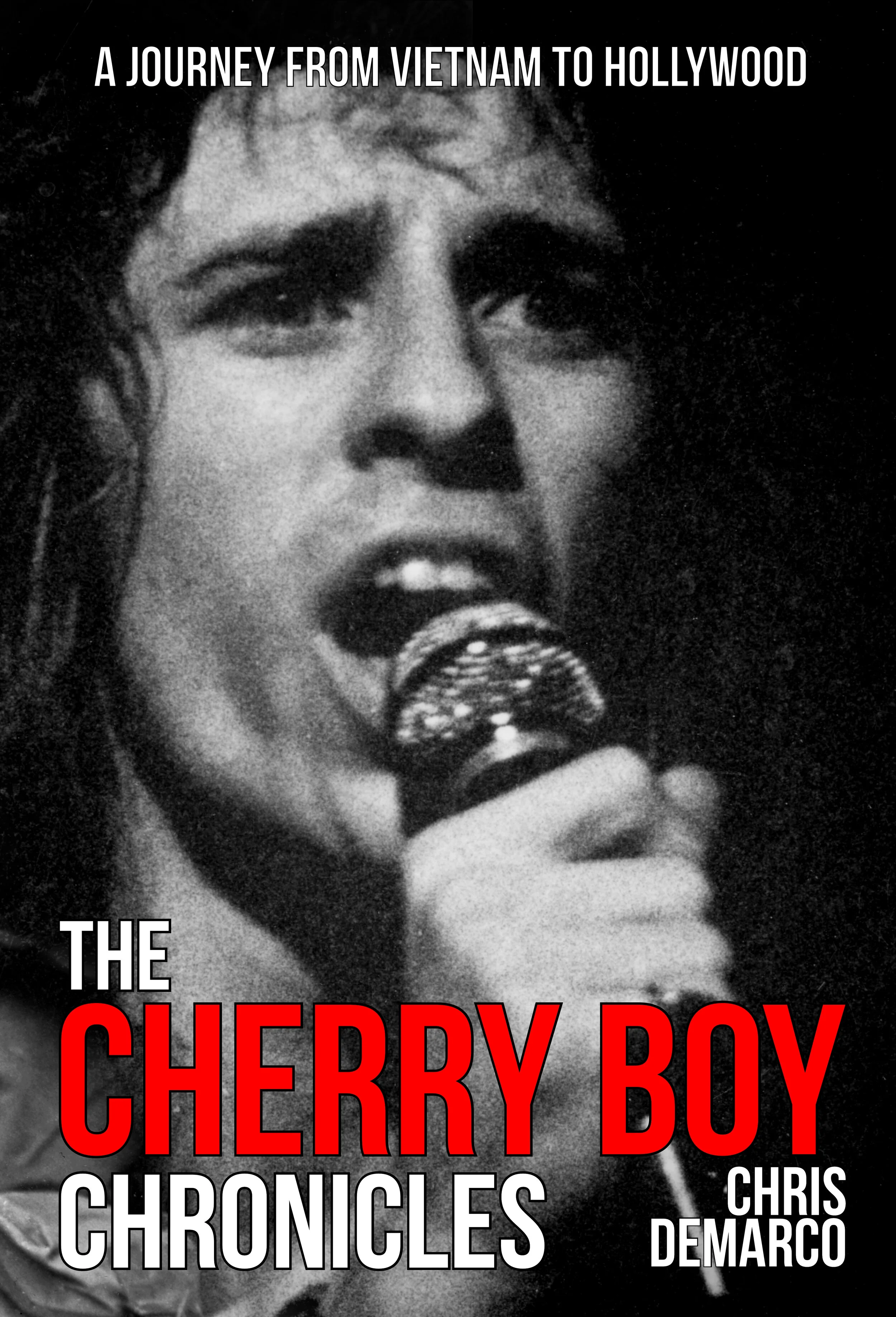
FINALLY received my order of paperback copies of “The Cherry Boy Chronicles.” Now you can order a signed copy right here on my page: MERCH

I’m still waiting for the hardcover edition but those should arrive shortly. The eBook has been available on Amazon for a few weeks. I’m sure even my friends and relatives who think they know me well will be surprised to learn about my part in the Vietnam war, and my life in the music business. There are many stories in the book that I’ve never shared with anyone before.

The Cherryboy Chronicles cover.jpg

SUNDAY

It has been a great week. Finally, my book “The Cherry Boy Chronicles” has been published and is available on Amazon. The print version is going to take a few more weeks, then you can order a signed copy directly from this website.

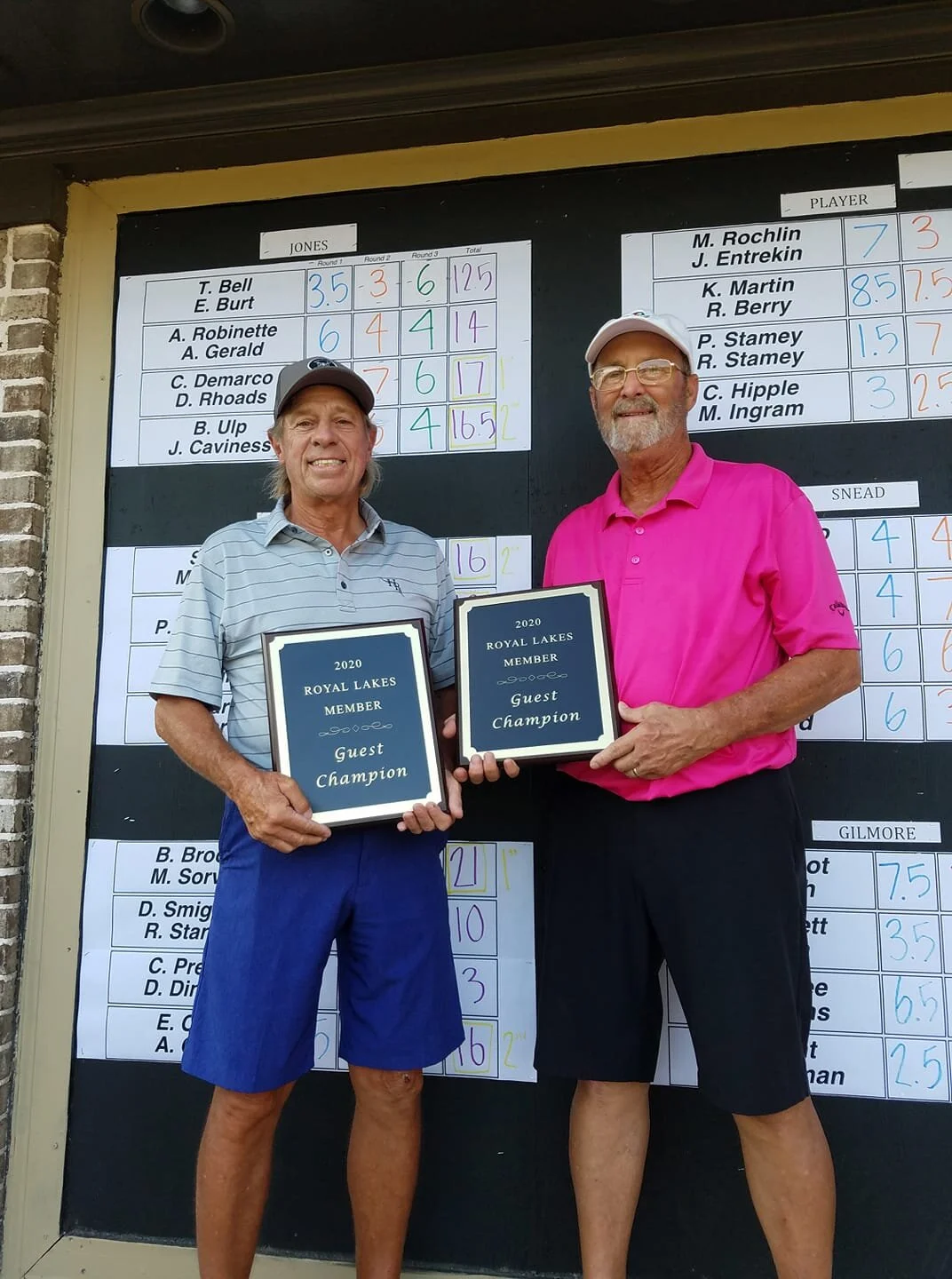
One of my favorite pastimes is playing golf. Yesterday I played in a member-guest event with my friend Dr. Dan Rhoades at Royal Lakes Country Club in Flowery Branch GA. The competition was tough, many younger players who could hit it 100 yards past us, but we prevailed and won our flight and then the shoot-out for the tournament victory.

Today I am making my famous Italian meatballs and spaghetti sauce, the kitchen is filled with great aromas.

royal lakes win.jpg